ENEnglish
 VITiếng Việt
 ZH中文
 KO한국어
 JA日本語
 FRFrançais
 ITItaliano
 PTPortuguês
 ESEspañol
 HEעברית
 ARالعربية

The main hazards
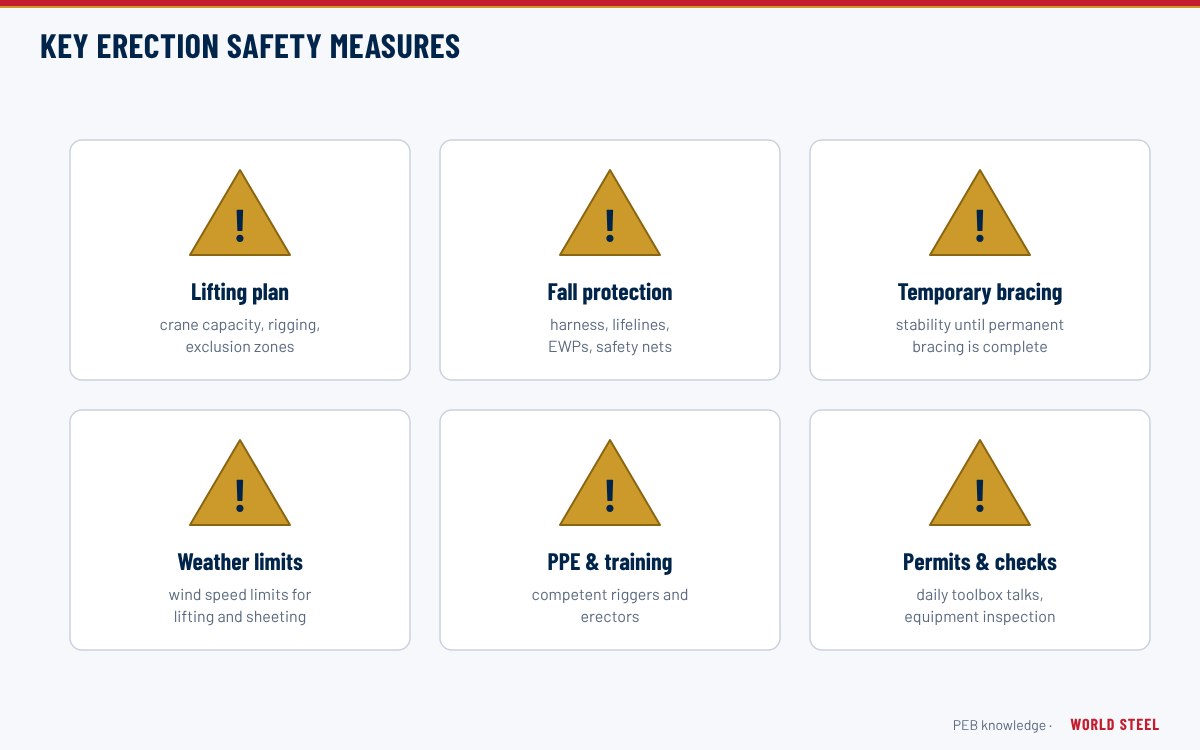
Steel erection combines work at height, heavy lifts and a structure that is unstable until it is complete. The principal hazards in pre-engineered building erection are falls from height – from frames, purlins and roof sheeting, including through fragile skylights – collapse of partially erected frames, dropped objects, crane incidents and wind acting on large unclad members or sheets. A safe erection is planned before it starts: the method statement, lifting plan and temporary bracing scheme are as important as the erection drawings.
Fall protection
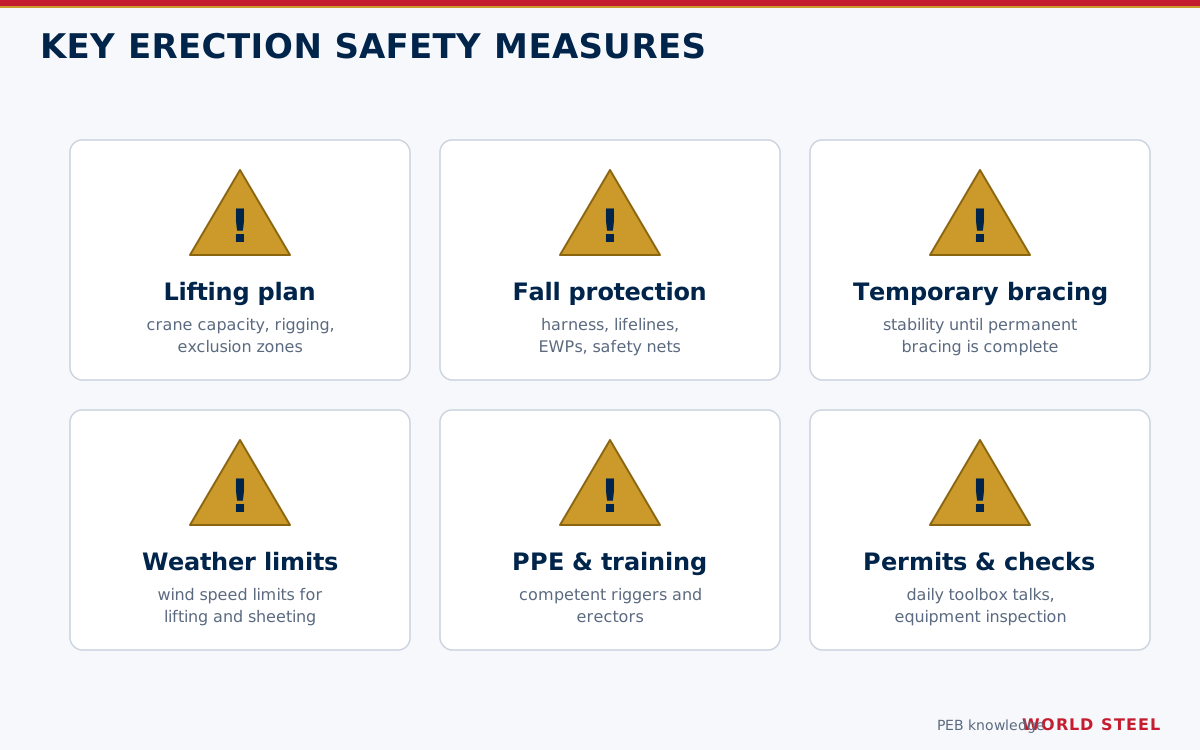
The hierarchy of control applies: eliminate work at height where possible, then use collective protection, then personal protection.
- Assemble at ground level – bolting rafter segments and attaching purlin clips on the ground reduces time at height.
- Elevating work platforms (EWPs) – boom and scissor lifts are the preferred access for connecting frames and secondary members.
- Safety nets and static lines – nets under roof work and horizontal lifelines along rafters allow sheeters to work while connected.
- Personal fall arrest – full-body harness with energy-absorbing lanyard anchored to a rated point; rescue plan in place.
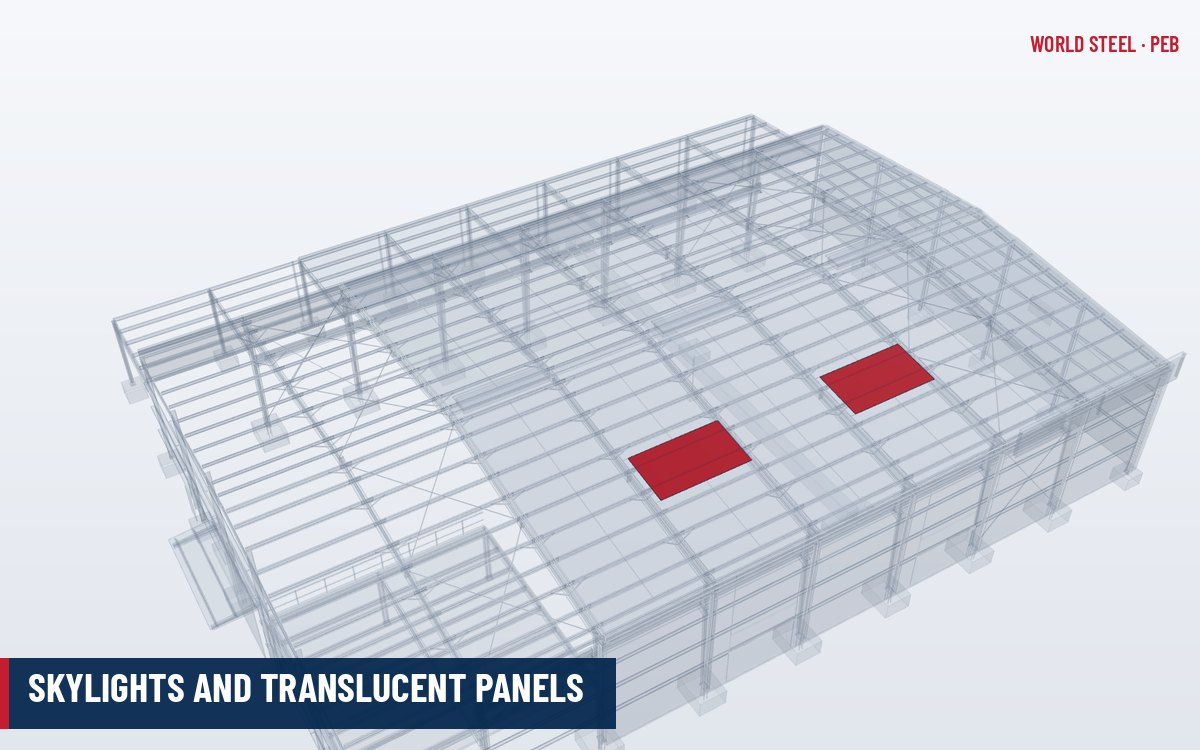
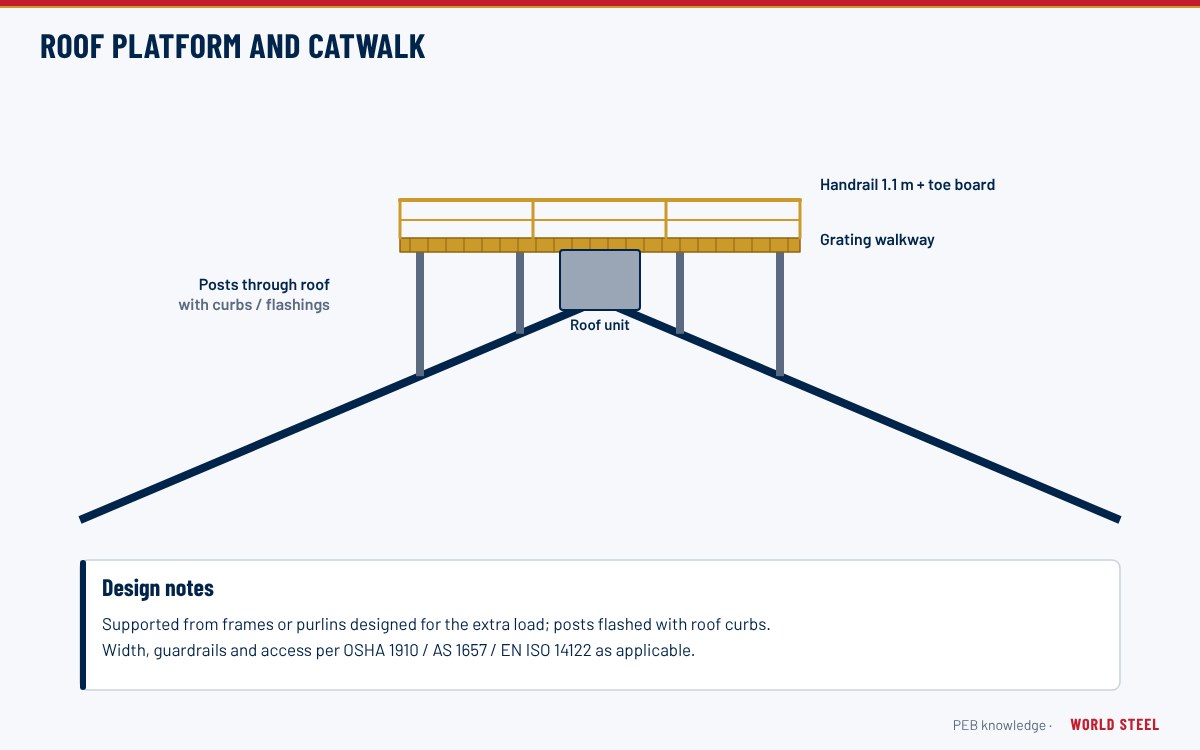
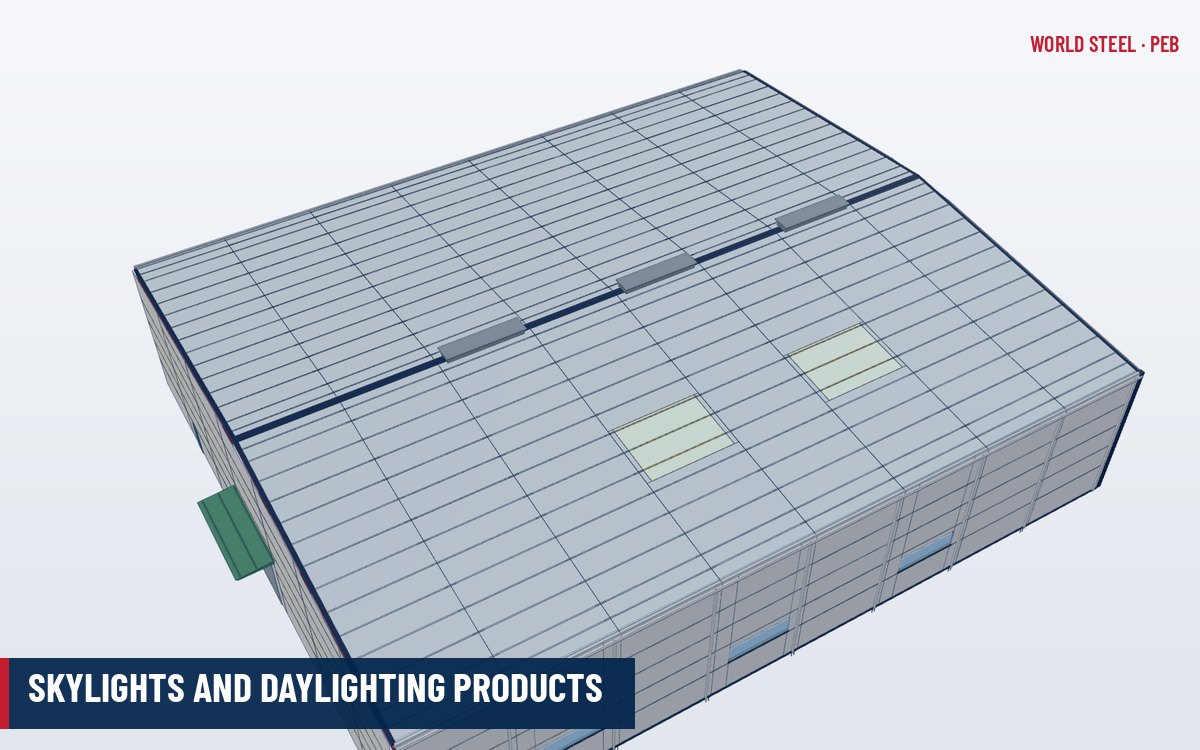
- Skylights and openings – translucent sheets are not walkable; mesh or covers are installed beneath or over them.
Regulations differ by country. In the US, OSHA 29 CFR 1926 Subpart R requires fall protection for steel erection work above 15 ft (4.6 m), with specific provisions for connectors and controlled decking zones. Australia relies on WHS Regulations and Safe Work Australia codes of practice for managing the risk of falls and for construction work; Canada on provincial OHS regulations; the EU on Directive 92/57/EEC for temporary or mobile construction sites and national rules.
Lifting operations
Every lift is planned. A lifting plan identifies the load (with rigging), radius, crane configuration and capacity, ground bearing, outrigger mats, exclusion zone and communication. Critical lifts – tandem lifts of long rafters, lifts near power lines or above 75% of rated capacity – require a specific plan approved by a competent person. Use spreader beams for long, slender rafters to prevent lateral buckling during lifting, tag lines to control the load and never stand under a suspended load. Cranes and rigging are inspected to ASME B30 in North America, AS 2550 in Australia or EN 13000 / national rules in Europe.
Temporary stability and wind
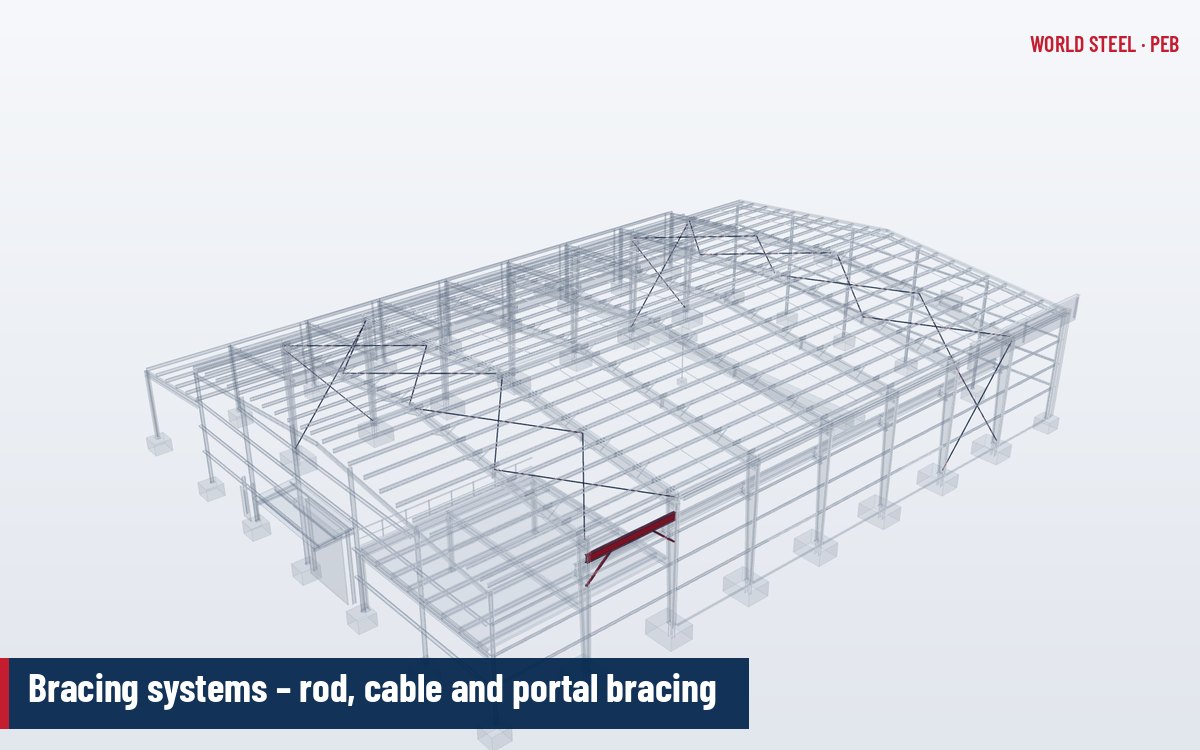
A frame standing on anchor bolts without purlins and bracing has very little lateral stability. The erector must provide temporary bracing or guying until the permanent bracing system and secondary members are complete. Anchor bolts are not usually designed to cantilever a free-standing column in wind unless the erection engineer has checked it. Set a wind speed limit for lifting and for handling sheets – typically lifting of large sheeted or panel areas stops well below the crane's rated wind limit – and secure loose sheets and bundles at the end of each shift.
| Item | Before work |
|---|---|
| Method statement and risk assessment | Approved and briefed to crew |
| Lifting plan | For every crane set-up; critical lifts separately approved |
| Temporary bracing scheme | Designed and shown on erection plan |
| Fall protection | EWPs, lifelines, nets and harnesses inspected |
| Exclusion zones | Barricaded under lifts and work at height |
| Weather | Wind limit and lightning stop rule agreed |
Roofing and cladding hazards
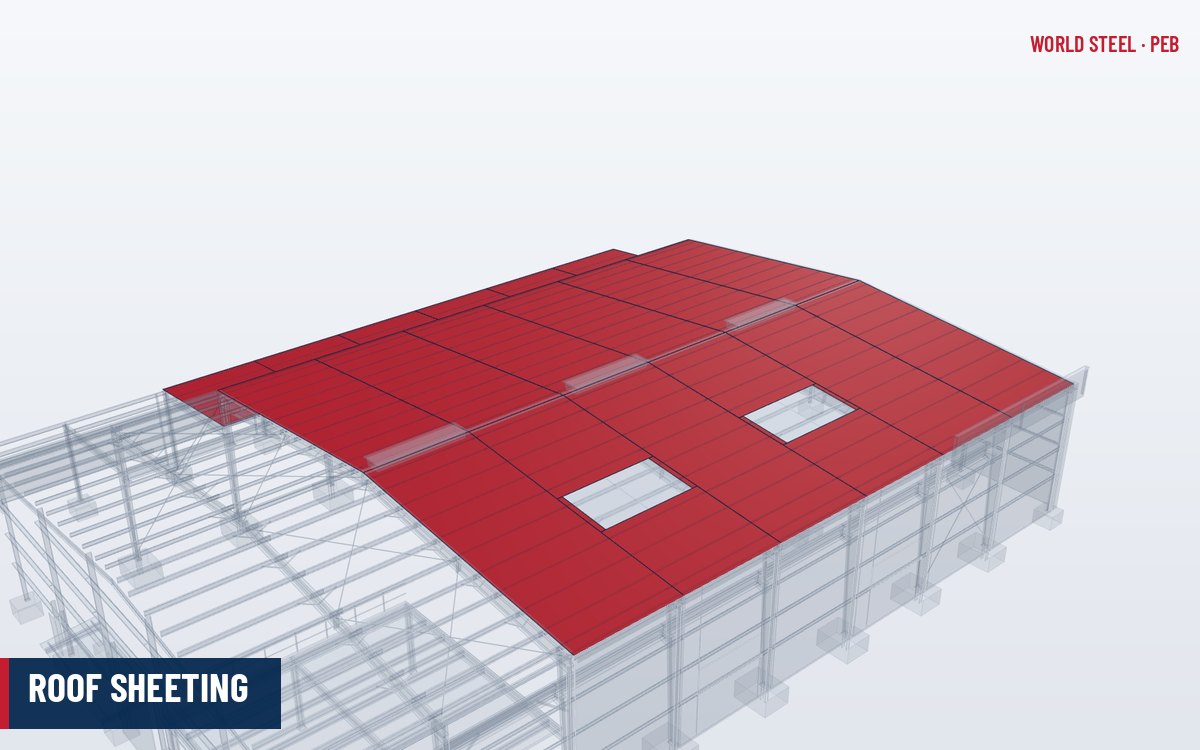
Once the frame is up, the risk profile changes from heavy lifts to work on and near the roof surface. Sheeting crews are exposed for longer than steel erectors, and many serious incidents involve falls through roofs.
- Fragile surfaces: translucent sheets, old or corroded roofs and light liner panels will not carry a person. Safety mesh under the roof, covers over skylights, or fall arrest systems are required; signage at roof access points warns maintenance staff later in the building's life.
- Edge protection: temporary guardrails at eaves and gables protect sheeters from falls over the edge; examples of product standards are EN 13374 (Europe) and AS/NZS 4994 (Australia/NZ). In the US, OSHA 29 CFR 1926.501 covers fall protection during roofing work and 1926.760 the steel erection provisions.
- Safety mesh: where used, it is installed over the purlins before insulation and sheeting and must meet the local standard (for example AS/NZS 4389 in Australia).
- Handling long sheets: long panels catch the wind and can sweep workers off the roof; lift bundles to the roof with a crane onto purlins over frames, open bundles only as needed and tie down unfixed sheets.
- Cuts and burns: sheet edges are sharp and metal roofs become very hot in sun; gloves, sleeves and eye protection against swarf are standard.
- Power tools and swarf: screw guns and nibblers at height need lanyards or tool tethers; swarf on a sloping roof is a slip hazard as well as a corrosion problem.
Insulation fibres irritate skin and eyes; long sleeves, gloves and eye protection are recommended when handling glass or rock wool, and the product safety data sheet should be part of the site induction.
How design and supply can help
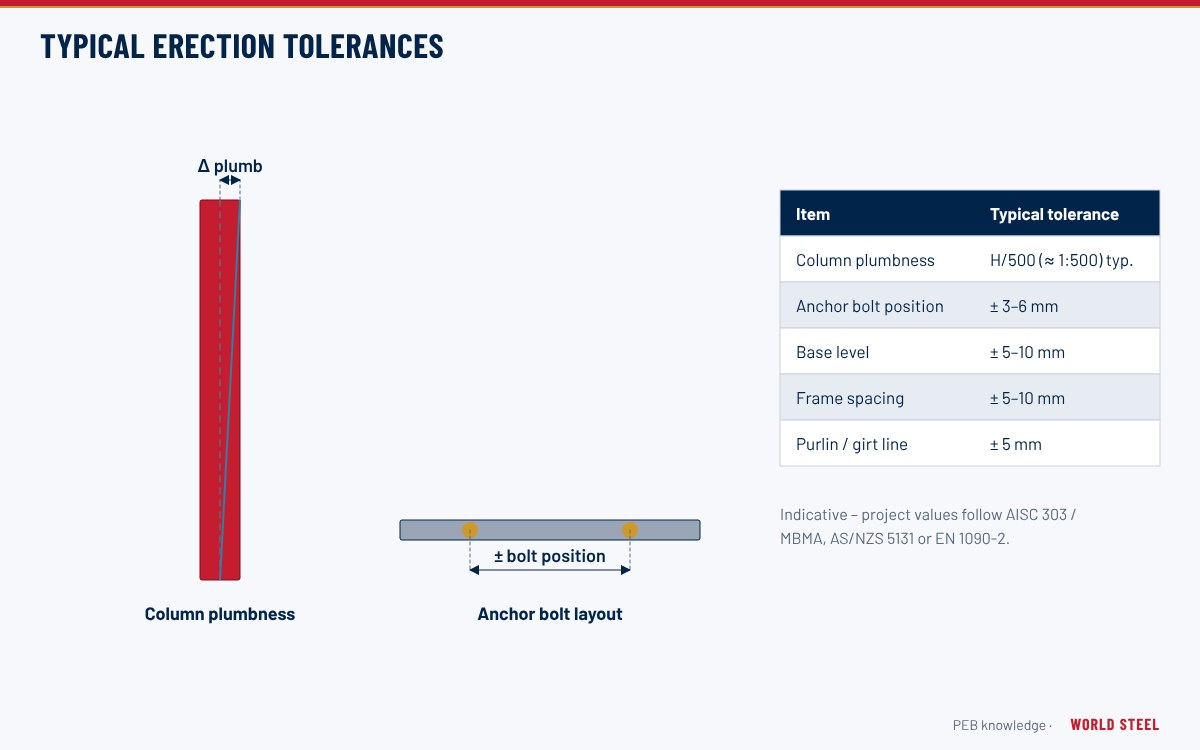
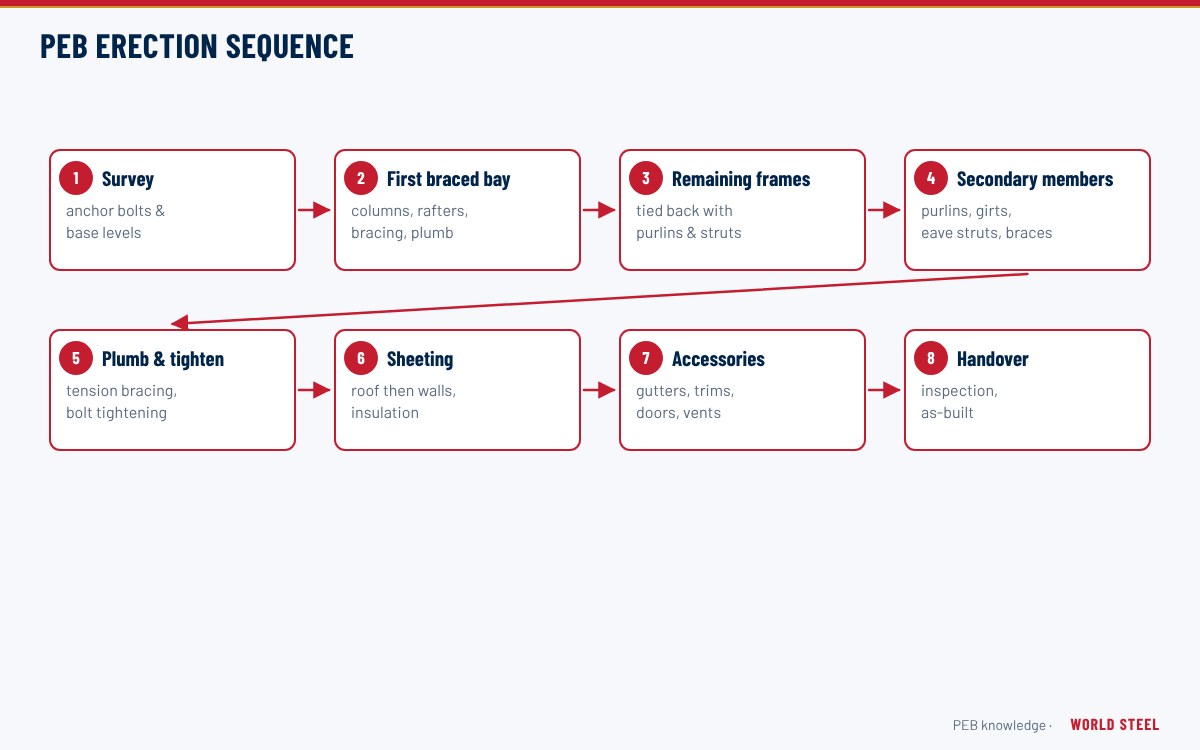
Safety starts in the shop: purlin clips welded in the factory, holes pre-punched for lifelines, piece marks visible from the ground and containers packed in erection sequence all reduce work at height. World Steel prepares erection drawings that show the braced bay and supports its clients through erection services and erection supervision. The structure's final accuracy is covered in erection tolerances.
The erector remains responsible for means and methods and for site safety; the manufacturer's drawings are not a temporary works design unless specifically agreed.
地域別の規格
| 地域 | 規格 | 範囲 |
|---|---|---|
 United States |
OSHA 29 CFR 1926 Subpart R / ASME B30 | Steel erection safety; cranes and rigging |
 Canada |
Provincial OHS regulations / CSA Z150 | Occupational safety; safety code on mobile cranes |
 Australia / NZ |
WHS Regulations / AS 2550 | Work health and safety; cranes, hoists and winches – safe use |
 Europe |
Directive 92/57/EEC / EN 1090-2 | Construction site safety; erection method statement |
よくある質問
Who is responsible for temporary bracing of a PEB?
The erector, as part of its means and methods. The building manufacturer's drawings show the permanent bracing; temporary bracing is designed or selected by the erector or its engineer.
Can workers walk on skylight panels?
No. Translucent sheets are fragile and are a leading cause of falls through roofs. Mesh, covers or guarding must be used and the panels clearly marked.
What wind speed stops steel erection?
The limit is set in the lifting plan by the crane manufacturer's data and the size of the load; large rafters and sheet bundles have a high sail area and are usually stopped at lower wind speeds than compact loads.