ENEnglish
 VITiếng Việt
 ZH中文
 KO한국어
 JA日本語
 FRFrançais
 ITItaliano
 PTPortuguês
 ESEspañol
 HEעברית
 ARالعربية

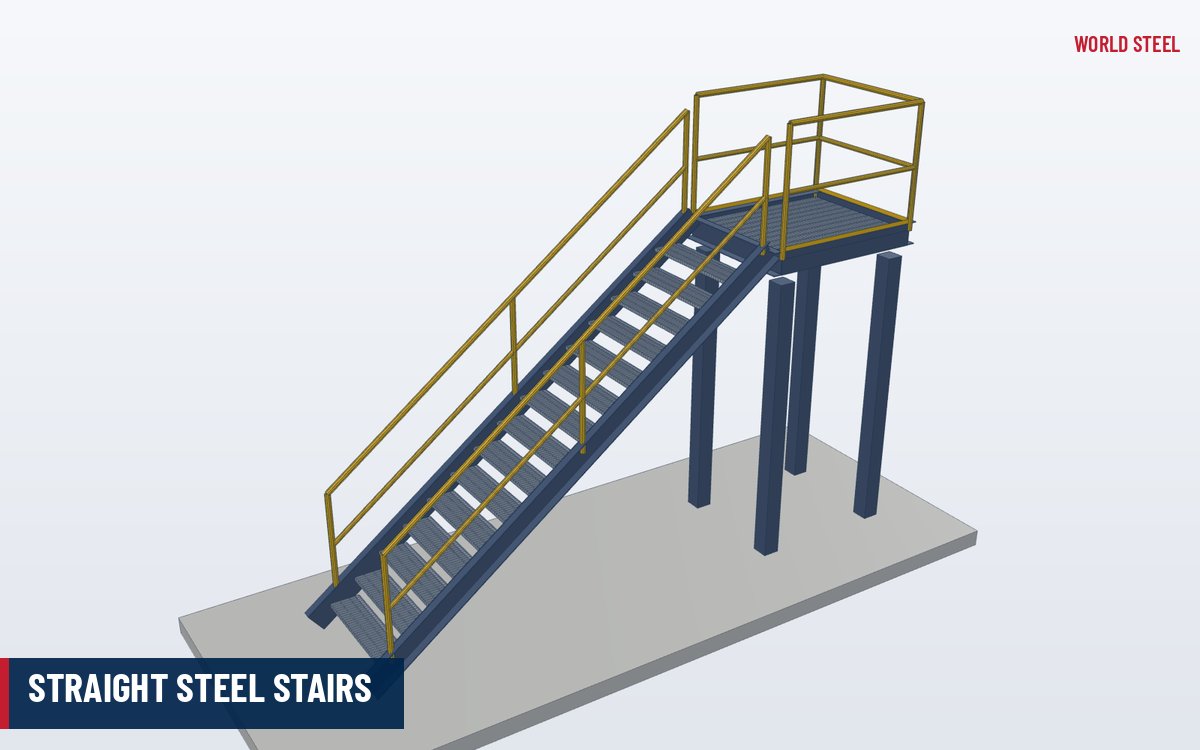
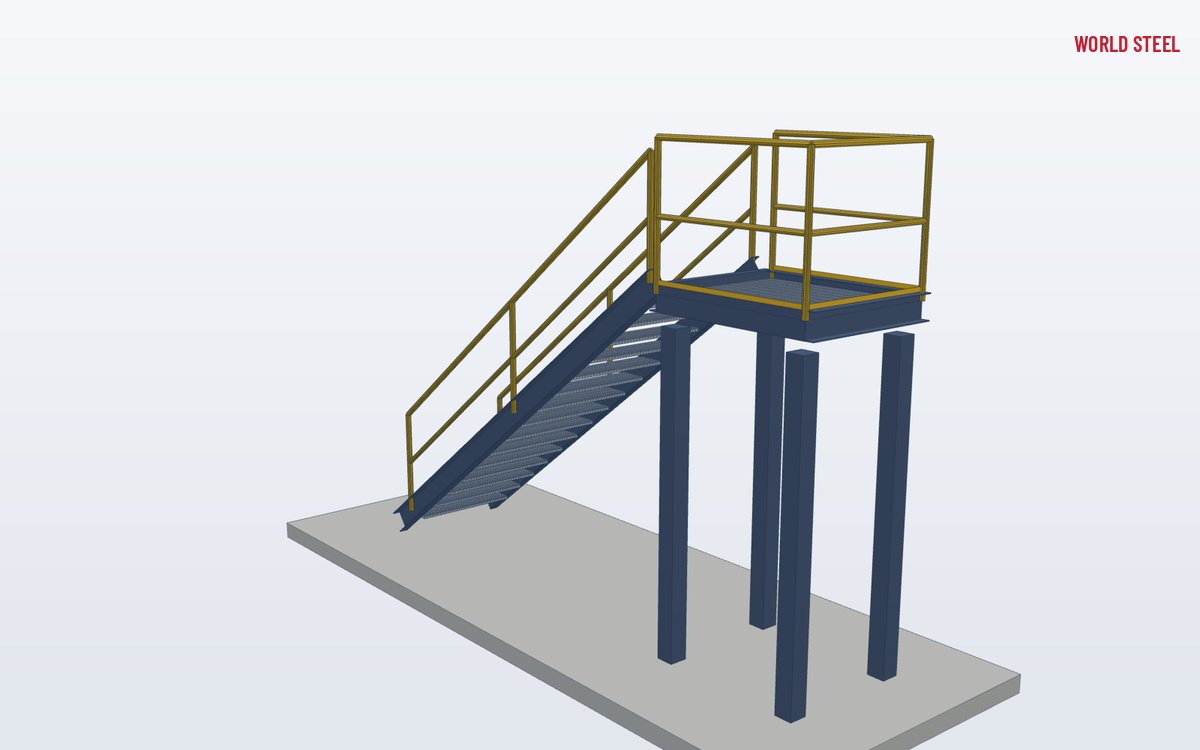
- Complete stairs: stringers, treads, landings, rails and fixings
- Geometry checked to OSHA / IBC, AS 1657 / NCC or EN ISO 14122
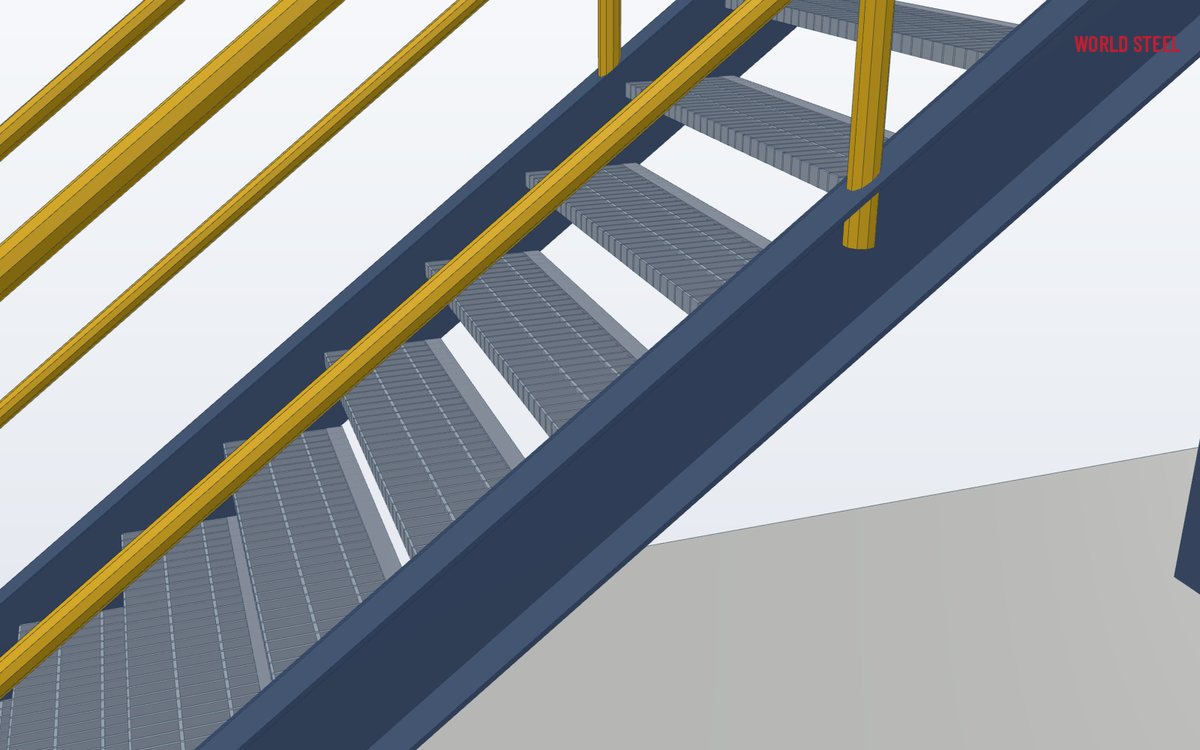
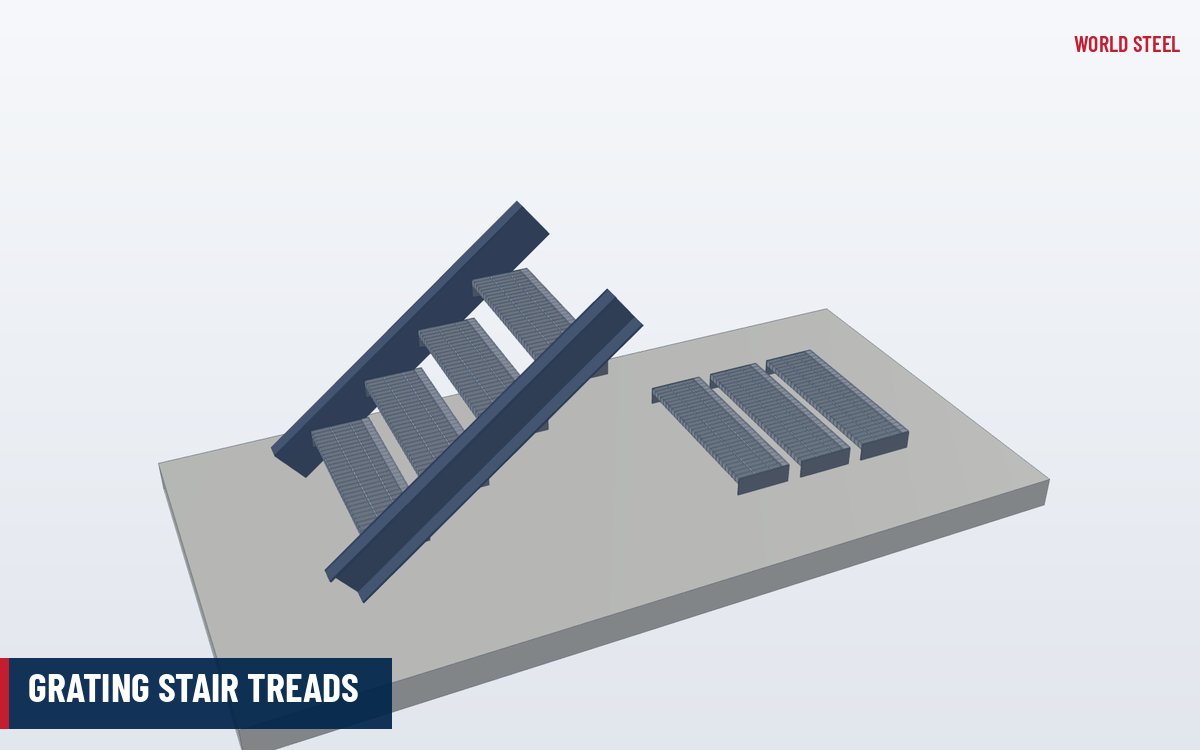
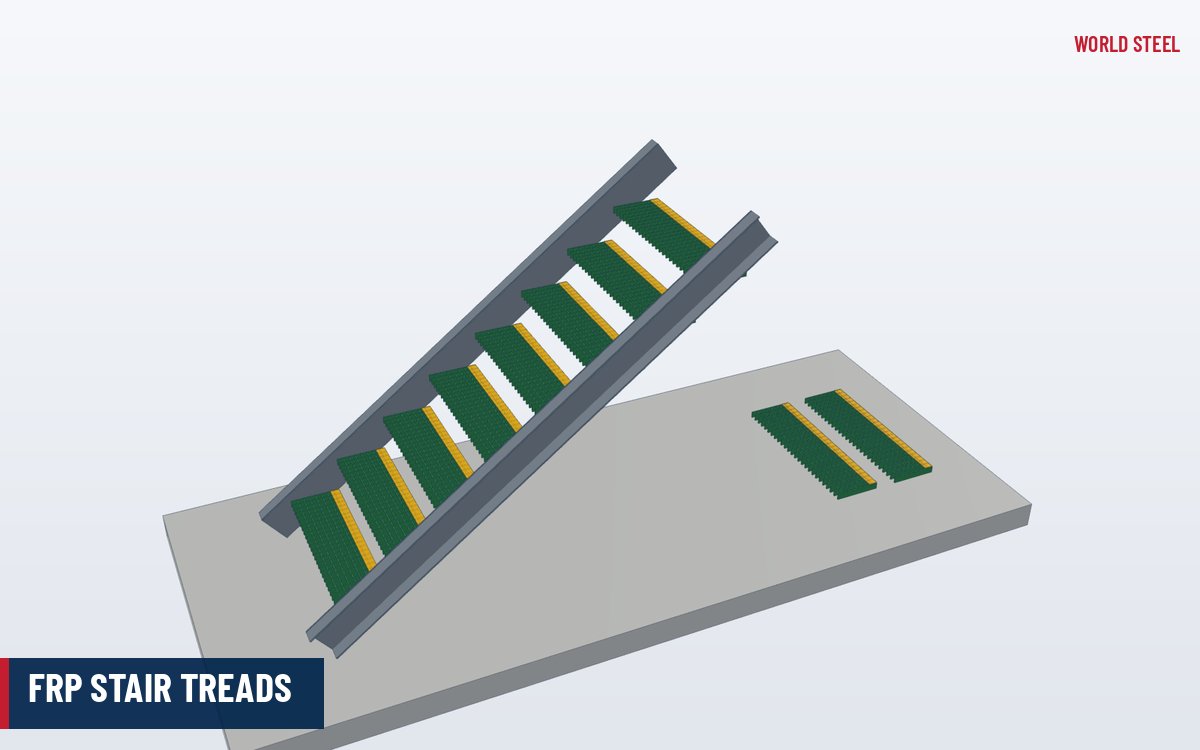
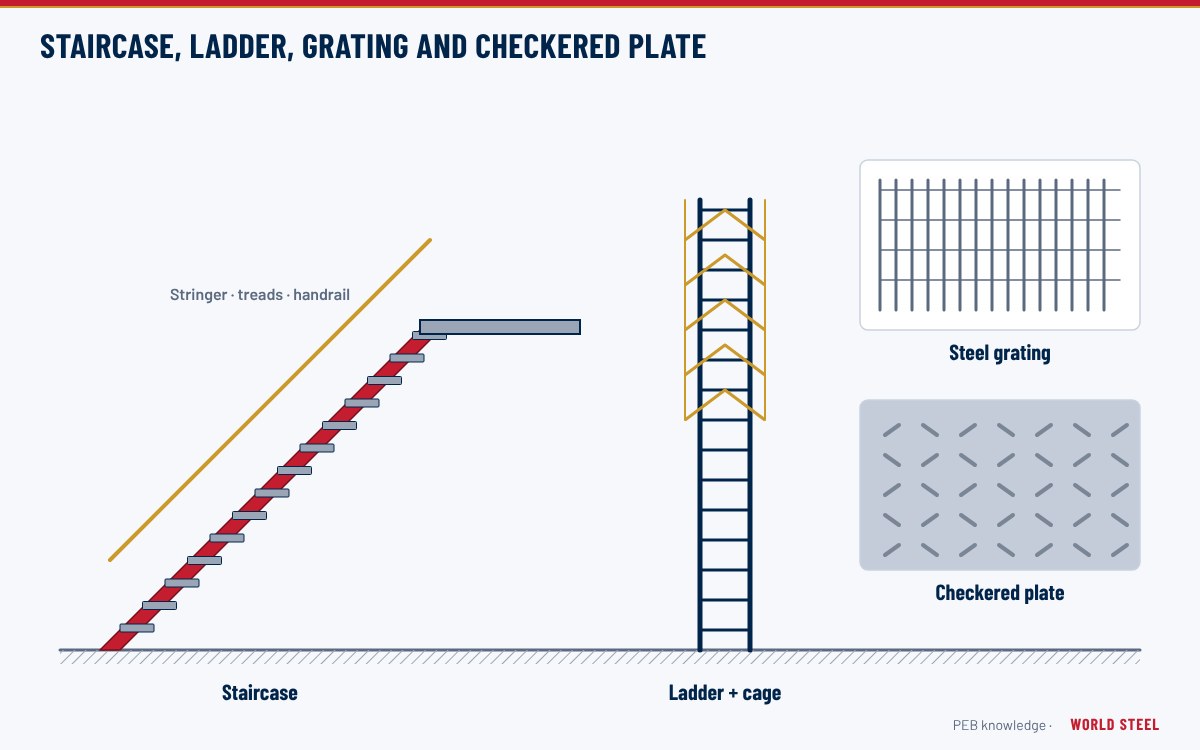
- Channel, plate or HSS stringers; grating or plate treads
- CE marking to EN 1090-1 for load-bearing stairs on the EU market
- Galvanized, painted or duplex, shipped as bolted kits
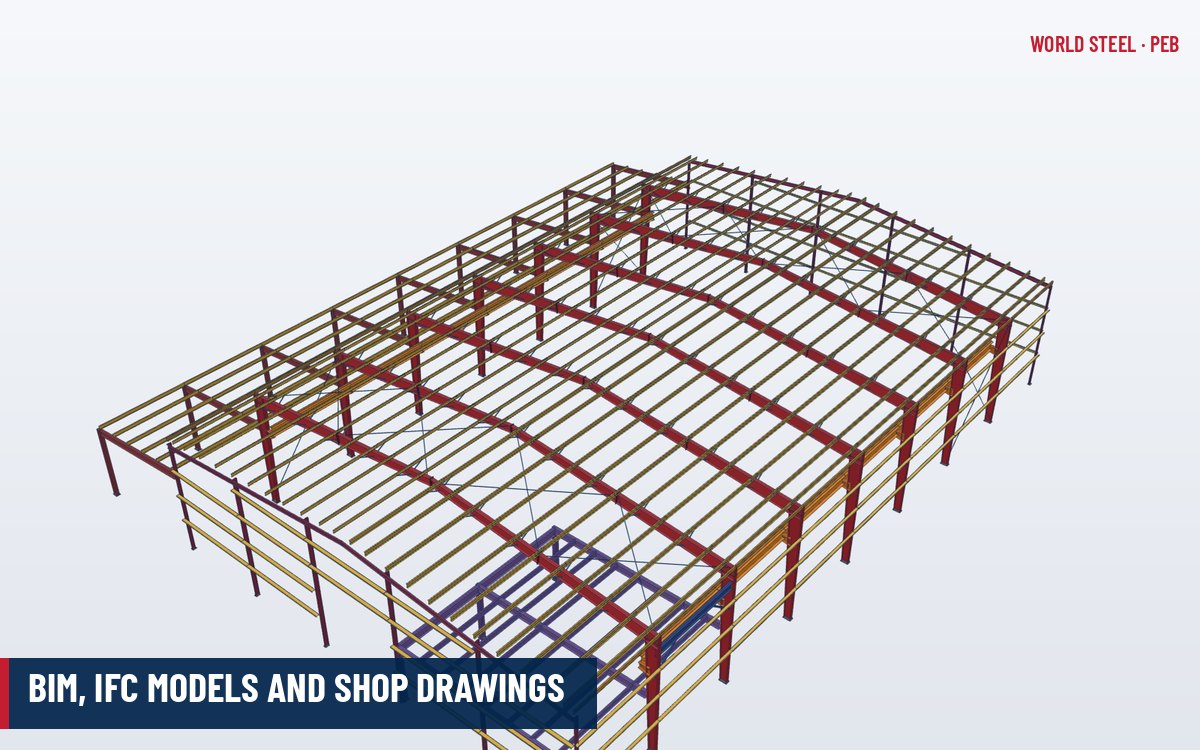
- Shop drawings and Tekla IFC model for coordination
What it is
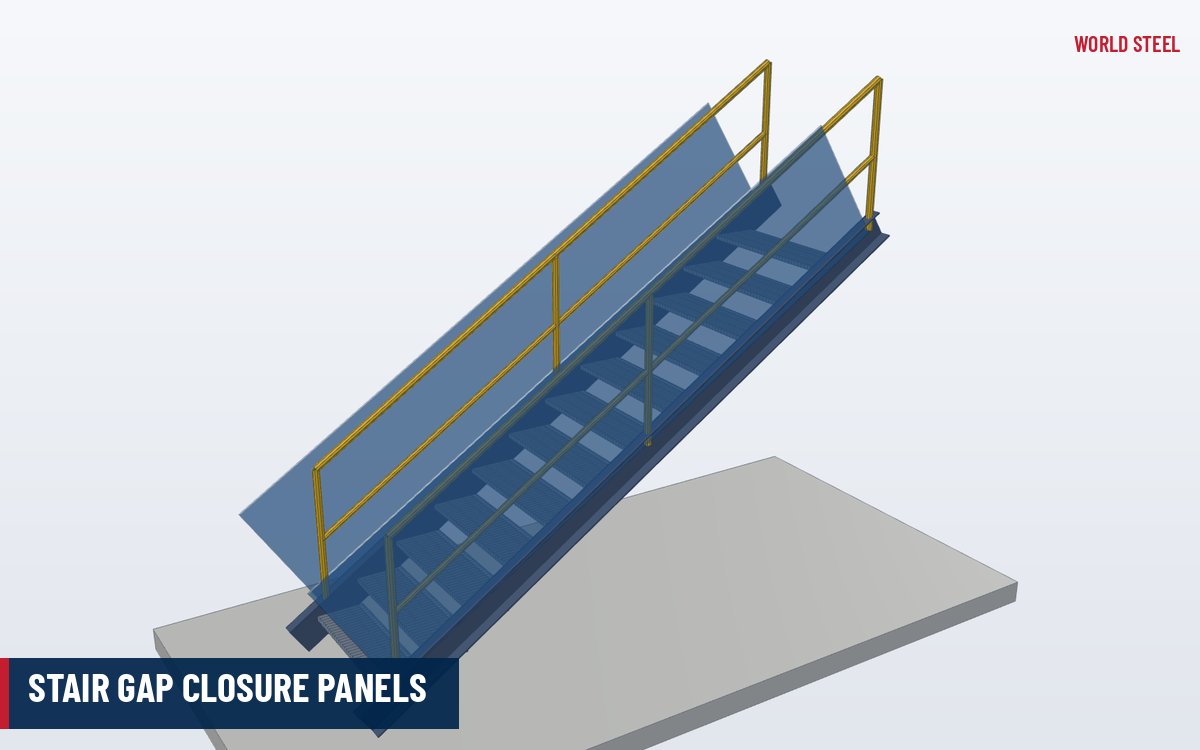
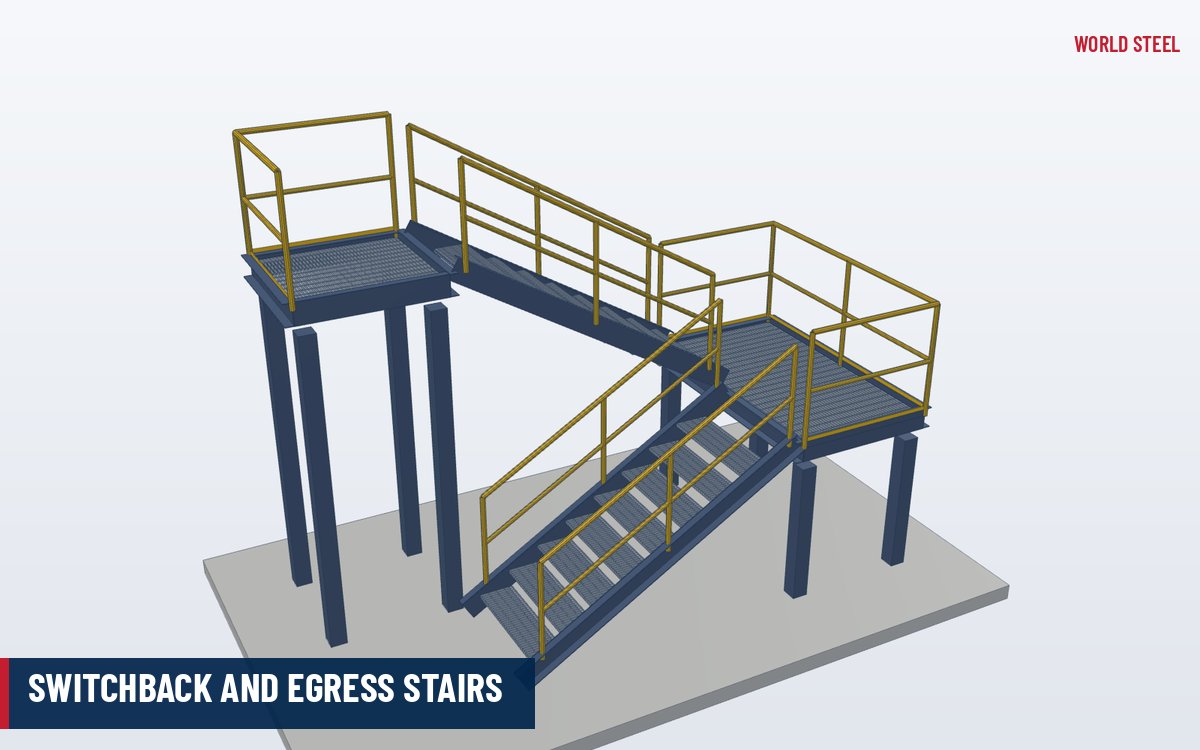
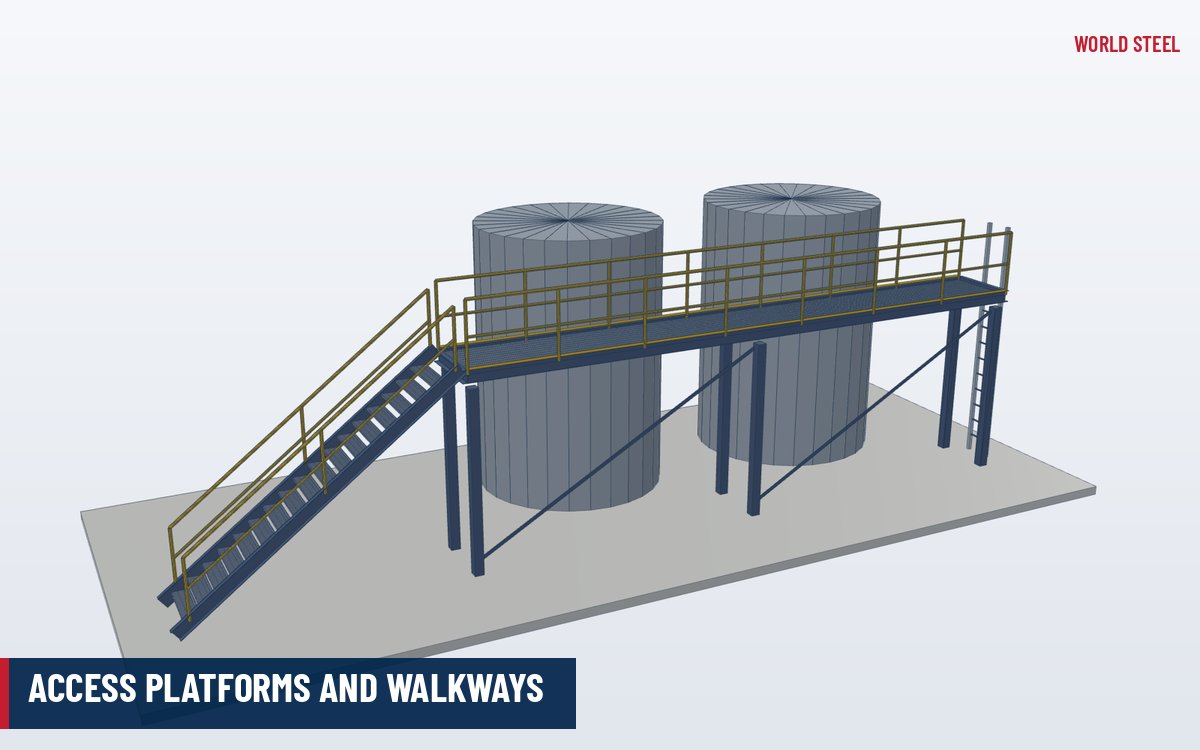
A straight stair is a single flight running in one direction between two levels, with a landing at the top and, on longer rises, intermediate landings in line. It is the simplest and most economical steel stair and the usual access to platforms, mezzanines, equipment and roof areas in industrial buildings. Where there is no room for a long straight run, a switchback stair folds the same rise into a smaller footprint.
World Steel supplies straight stairs as complete kits – stringers, grating treads or plate treads, landing frames, stair rails and guardrails, base plates and all bolts – detailed to the actual floor-to-floor height on site.
Types and options
| Element | Options | Notes |
|---|---|---|
| Stringers | Channel (C / PFC), flat plate, HSS / RHS | Channels are economical; plate and RHS stringers give a cleaner architectural look |
| Treads | Grating, checkered plate, pan treads for concrete fill | Grating outdoors and in plants; concrete-filled pans in buildings |
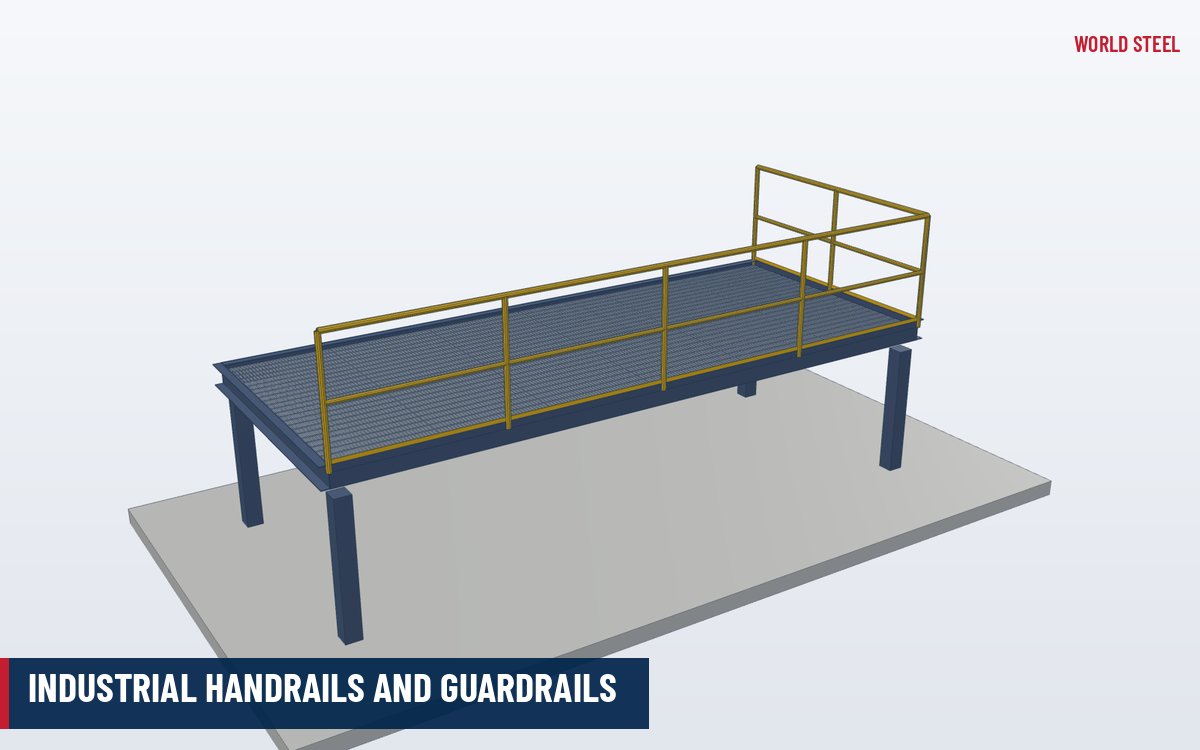
| Rails | Pipe, tube or flat-bar rails; infill bars, mesh or glass | Industrial rails or public balustrades depending on occupancy |
| Landings | Framed landings with grating or plate | Top, intermediate and bottom landings |
| Connections | Bolted to platform beams; base plates to slab | Anchors per ACI 318, AS 5216 or EN 1992-4 |
Design and compliance
Stair geometry depends on the destination and on whether the stair is a workplace access (machinery, plant, maintenance) or a stair in a building used by the public. The designer decides which rules apply; World Steel checks the geometry and loads on every stair it details.
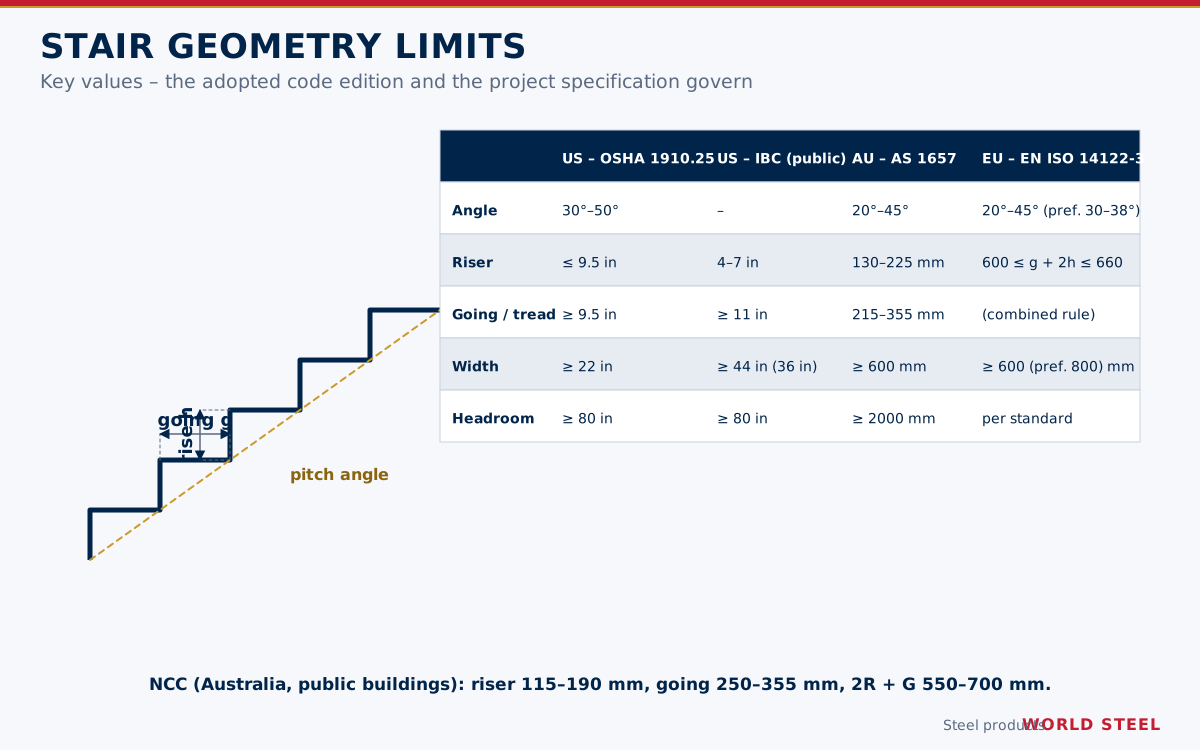
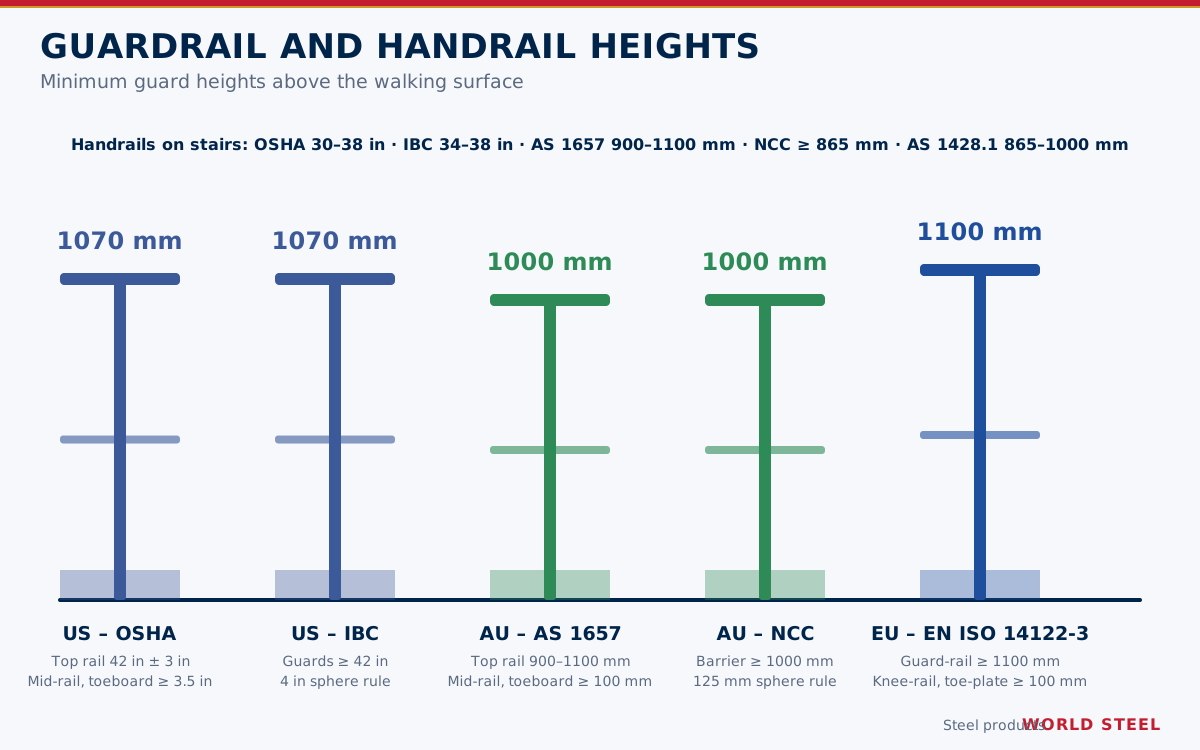
- US workplaces (OSHA 1910.25): angle 30°–50°, riser ≤ 9.5 in, tread depth ≥ 9.5 in, width ≥ 22 in, headroom ≥ 80 in; stairs carry 5 × the anticipated live load and not less than a 1,000 lb concentrated load. Handrails 30–38 in above the tread leading edge; stair rail systems installed since 17 January 2017 need a top rail of at least 42 in.
- US buildings (IBC 2021): riser 4–7 in, tread ≥ 11 in, width ≥ 44 in (36 in where occupant load is below 50), headroom ≥ 80 in, handrails 34–38 in, guards ≥ 42 in. Rail loads per ASCE 7: 50 lb/ft and a 200 lb concentrated load.
- Australia (AS 1657): angle 20°–45°, riser 130–225 mm, going 215–355 mm, 2R + G 540–700 mm, headroom ≥ 2000 mm, rails 900–1100 mm. Public stairs to NCC 2022: riser 115–190 mm, going 250–355 mm, 2R + G 550–700 mm, handrails ≥ 865 mm.
- Europe (EN ISO 14122-3): angle 20°–45°, preferably 30°–38°; 600 mm ≤ g + 2h ≤ 660 mm; width ≥ 600 mm, preferably 800 mm; guard-rail ≥ 1100 mm with knee-rail and toe-plate. Stairs in buildings follow national regulations and EN 1991-1-1 loads.
Under AISC 303 stairs are "other steel" items (CSI 05 51 00 Metal Stairs) unless the contract says otherwise. In the EU, load-bearing stairs are CE-marked to EN 1090-1 under World Steel's EN 1090 certification.
Fabrication and finishing at World Steel
Stringers are CNC-cut and drilled so tread holes line up exactly; landing frames and rail posts are welded in jigs. Welding follows AWS D1.1, AS/NZS 1554.1 or EN 1090-2 / EN ISO 3834-2 procedures and is visually inspected, with NDT where the specification requires it. Stairs can be trial-assembled in the shop to check rise, going and rail continuity. Components are galvanized by qualified galvanizers to ASTM A123, AS/NZS 4680 or EN ISO 1461, or painted to the project system, and shipped as bolted kits to protect the finish.
Installation and specifying
Survey the actual floor-to-floor height before shop drawings are approved – a few millimetres difference changes every riser. On site, set the base plates, lift the stringer pair as one braced unit, bolt to the landing beam, then install treads and rails. Specify the floor-to-floor height, available run, width, code basis, tread type, rail type and finish, and send the platform model where possible – see PEB stairs, ladders and gratings.
Standards and requirements by market
Codes World Steel designs, fabricates and documents this product to – and the key geometric and load requirements in each market.
 United States
- OSHA 1910.25Stairways
- OSHA 1910.29Fall protection systems – handrails and stair rails
- IBC 2021 §1011 / §1014 / §1015Stairways, handrails and guards
- ASCE 7Minimum design loads (handrail and guard loads)
- NAAMM AMP 510Metal Stairs Manual
- AWS D1.1Structural welding code – steel
- Stair angle / riser / tread (OSHA)
- 30°–50°, riser ≤ 9.5 in, tread ≥ 9.5 in (OSHA 1910.25(c))
- Stair width / headroom (OSHA)
- ≥ 22 in / ≥ 80 in (OSHA 1910.25)
- Riser / tread (IBC)
- 4–7 in / ≥ 11 in (IBC 1011.5.2)
- Handrail height (IBC)
- 34–38 in (IBC 1014.2)
- Rail loads
- 50 lb/ft and 200 lb concentrated (ASCE 7)
 Australia / NZ
- AS 1657-2018Fixed platforms, walkways, stairways and ladders
- NCC 2022 Vol. 1Stairs and barriers in buildings
- AS/NZS 1170.1Imposed actions (barrier loads Table 3.3)
- AS 4100Steel structures
- AS/NZS 5131 WSC certifiedFabrication and erection of structural steelwork
- Stair angle (AS 1657)
- 20°–45° (AS 1657)
- Riser / going (AS 1657)
- 130–225 mm / 215–355 mm, 2R + G 540–700 mm (AS 1657)
- Riser / going (NCC)
- 115–190 mm / 250–355 mm, 2R + G 550–700 mm (NCC 2022)
- Headroom
- ≥ 2000 mm (AS 1657)
 Europe
- EN ISO 14122-3Stairs, stepladders and guard-rails
- EN 1991-1-1Imposed loads (Table 6.12 barrier loads)
- EN 1993-1-1Design of steel structures
- EN 1090-1 / EN 1090-2CE marking and execution of steel structures
- EN ISO 3834-2Quality requirements for fusion welding
- Stair angle
- 20°–45°, preferably 30°–38° (EN ISO 14122-3)
- Step formula
- 600 mm ≤ g + 2h ≤ 660 mm (EN ISO 14122-3)
- Guard-rail height
- ≥ 1100 mm (EN ISO 14122-3)
Summary for orientation only – the project specification, the adopted code edition and the authority having jurisdiction govern.
Finishes
| Finish | Standards / notes |
|---|---|
| Hot-dip galvanized | ASTM A123 · AS/NZS 4680 · EN ISO 1461 |
| Painted | SSPC-SP 6 / SP 10 · AS/NZS 2312.1 · EN ISO 12944 |
| Duplex (galvanized + paint) | ASTM A123 + paint · AS/NZS 2312.2 + 2312.1 · EN ISO 1461 + EN ISO 12944 |
Frequently asked questions
Which stair rules apply – OSHA or IBC?
OSHA 1910 applies to workplace access in general industry; the IBC applies to stairs in buildings, including egress. Many US projects must satisfy both, so the stricter value governs. Your designer confirms the basis and World Steel details to it.
Do you CE-mark stairs for Europe?
Yes. Load-bearing stairs placed on the EU market are CE-marked to EN 1090-1 under World Steel's EN 1090-2 certification up to EXC3, with a Declaration of Performance.
Can stairs be shipped assembled?
Short stairs can ship as welded units; most are shipped as bolted kits to protect the finish and fit containers. Trial assembly can be done in the shop where specified.
What do you need to start shop drawings?
The surveyed floor-to-floor height, the available run, width, code basis and the details of the supporting steel at the top and bottom.
 Germany
 AS/NZS 5131 CC3
 EN 1090 EXC3 · CE