ENEnglish
 VITiếng Việt
 ZH中文
 KO한국어
 JA日本語
 FRFrançais
 ITItaliano
 PTPortuguês
 ESEspañol
 HEעברית
 ARالعربية

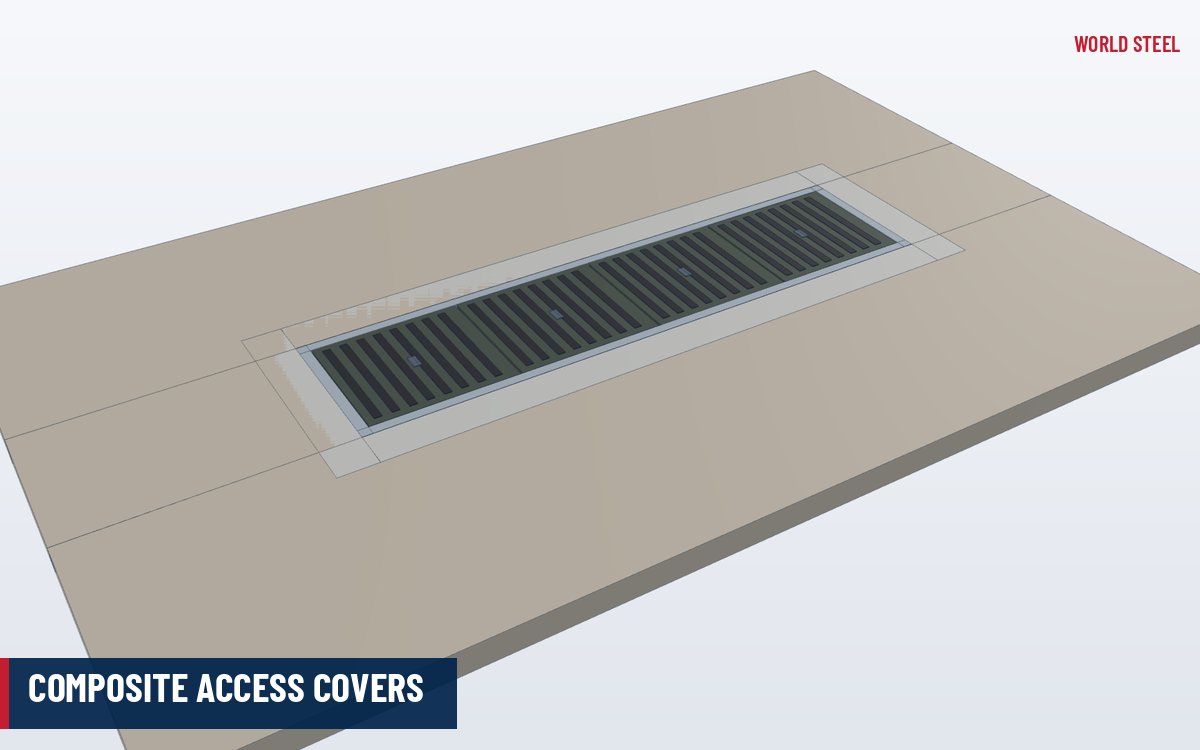
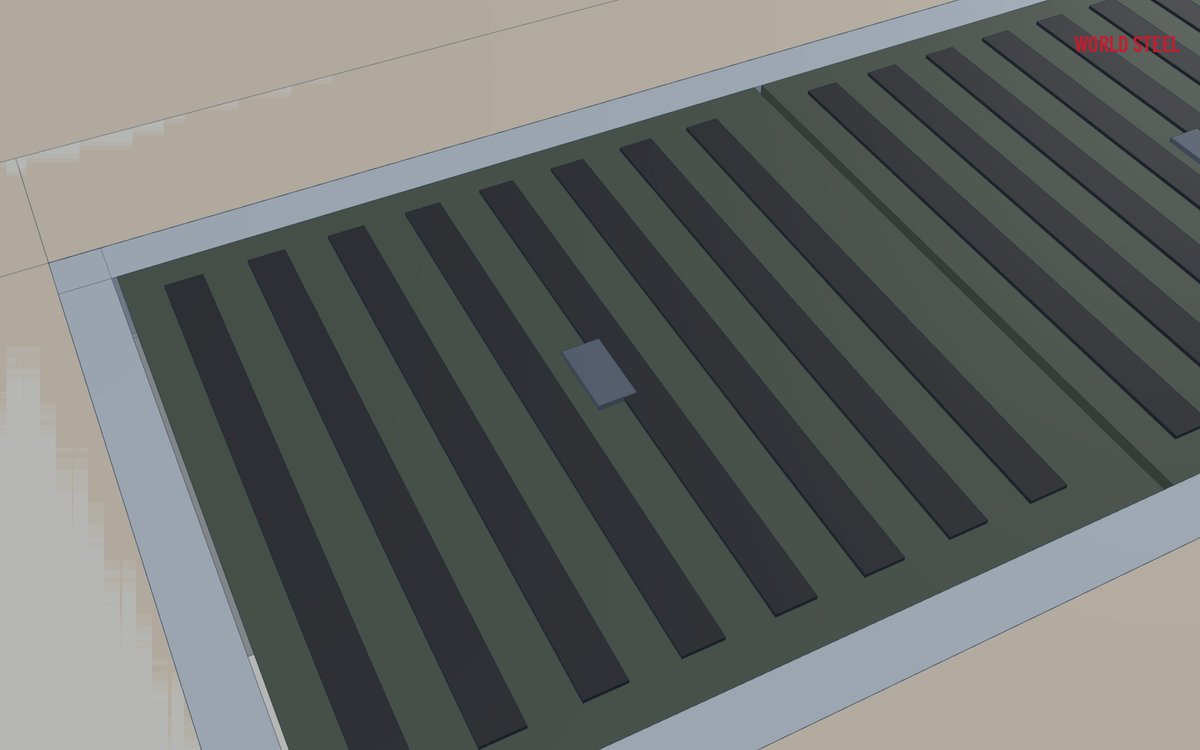
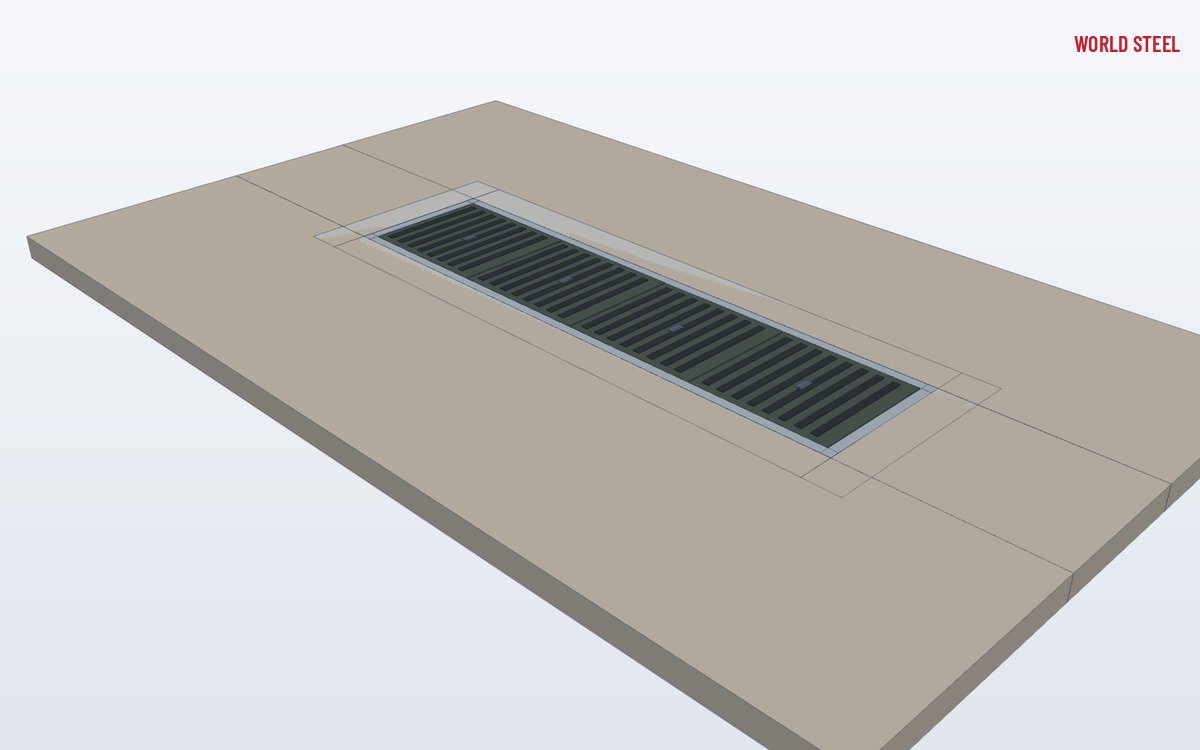
- Light enough for manual handling by one or two people
- No scrap value – deters theft
- Non-conductive for electrical and telecom pits
- Corrosion resistant in coastal and chemical areas
- Classes per AS 3996 / EN 124 as tested by the maker
What they are
Composite access covers are moulded from glass-reinforced plastic (GRP) or other fibre-reinforced polymer compounds. The fibres carry the load and the resin binds and protects them, giving a cover that is much lighter than an equivalent iron or steel lid but still able to resist wheel loads in its rated class. The top surface is usually textured or gritted for slip resistance, and lifting is by keyholes or recessed handles.
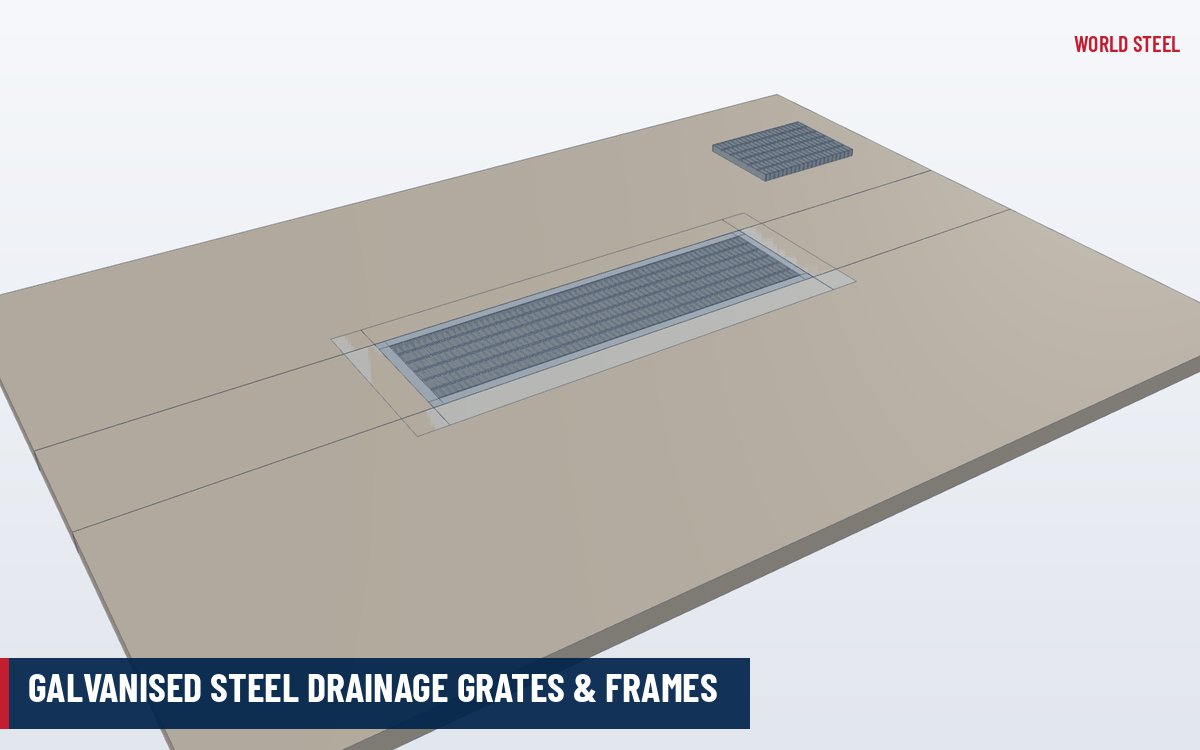
Composite covers are produced by specialist manufacturers. World Steel does not mould composites; we supply them as part of the project drainage and pit package, and where the opening, slab detail or loading calls for it we fabricate steel frames, galvanised surrounds and support beams in our plant to receive them. This lets clients combine composite covers with our steel drainage grates, steel pit covers and ductile iron covers in one delivery.
Why choose composite
| Property | Composite | Ductile iron / steel |
|---|---|---|
| Weight | Light – manual lifting is practical | Heavy – lifting tools often needed |
| Scrap value | None – low theft risk | High – theft risk in some areas |
| Electrical | Non-conductive | Conductive – earthing may be needed |
| Corrosion | Does not rust | Relies on coating or galvanising |
| Heavy traffic | Limited to the tested class | Available up to the heaviest classes |
Typical uses are telecom and electrical pits, utility pits in footpaths and landscaping, water meter and valve pits, pits near the coast or in chemical plants, and locations where repeated theft of metal covers has been a problem.
Classes, testing and compliance
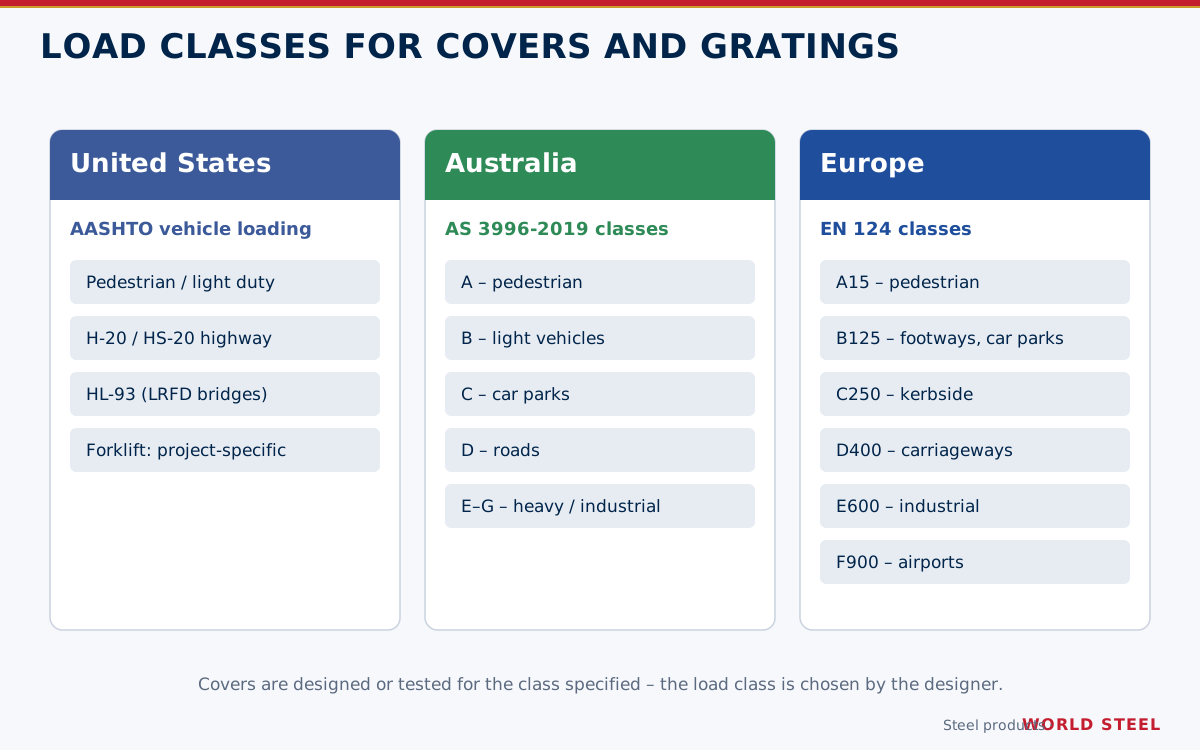
The load class is chosen by the designer from the location – AS 3996-2019 in Australia (class A 10 kN for pedestrian areas, B 80 kN for footways that may be driven over, C 150 kN for car parks and malls, D 210 kN for roads), the EN 124 series in Europe, and project or AASHTO loading in the US. A composite cover's class depends on its design, layup and the manufacturer's type testing, which may also cover long-term behaviour such as creep, temperature and UV exposure.
World Steel does not test or certify composite covers. Class ratings, test reports and any authority acceptance are product-specific and are supplied by the manufacturer where they exist. Please tell us the class and any approval list that applies so we only offer suitable products.
What World Steel provides
- Selection support to match the manufacturer's product to the clear opening and class.
- Fabricated steel frames and surrounds, hot-dip galvanised to AS/NZS 4680, ASTM A123 or EN ISO 1461.
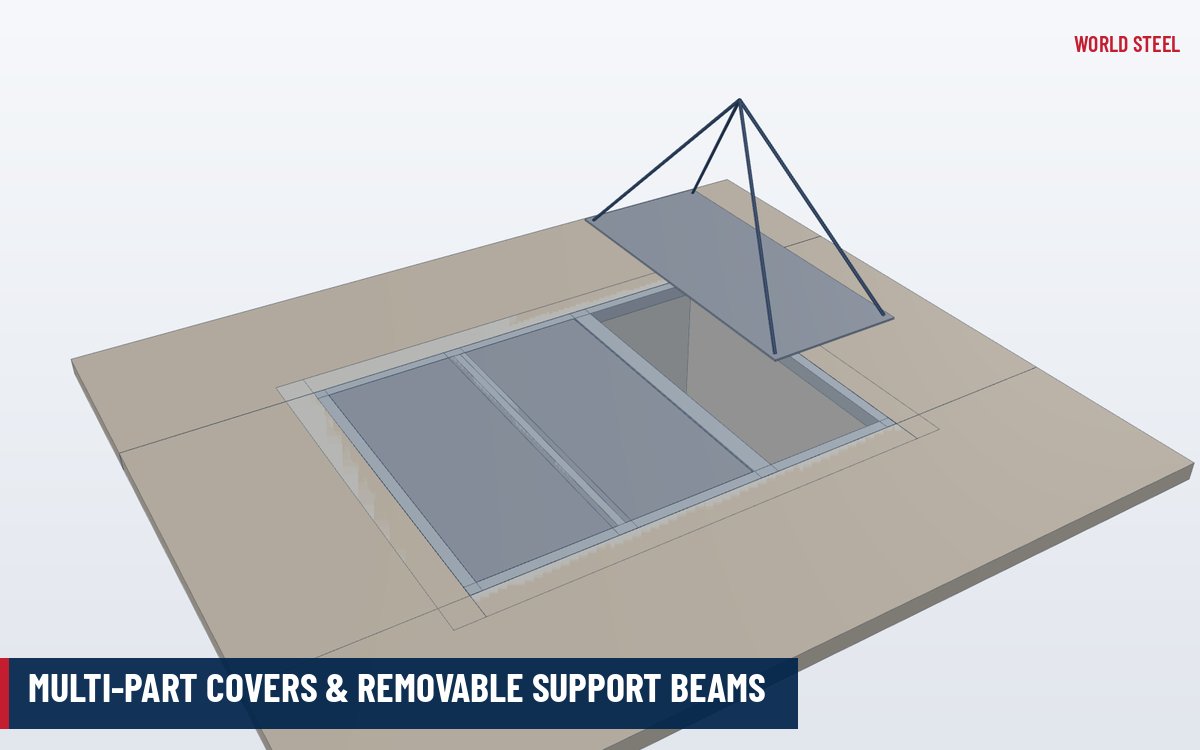
- Support beams for multi-lid layouts; see multi-part covers.
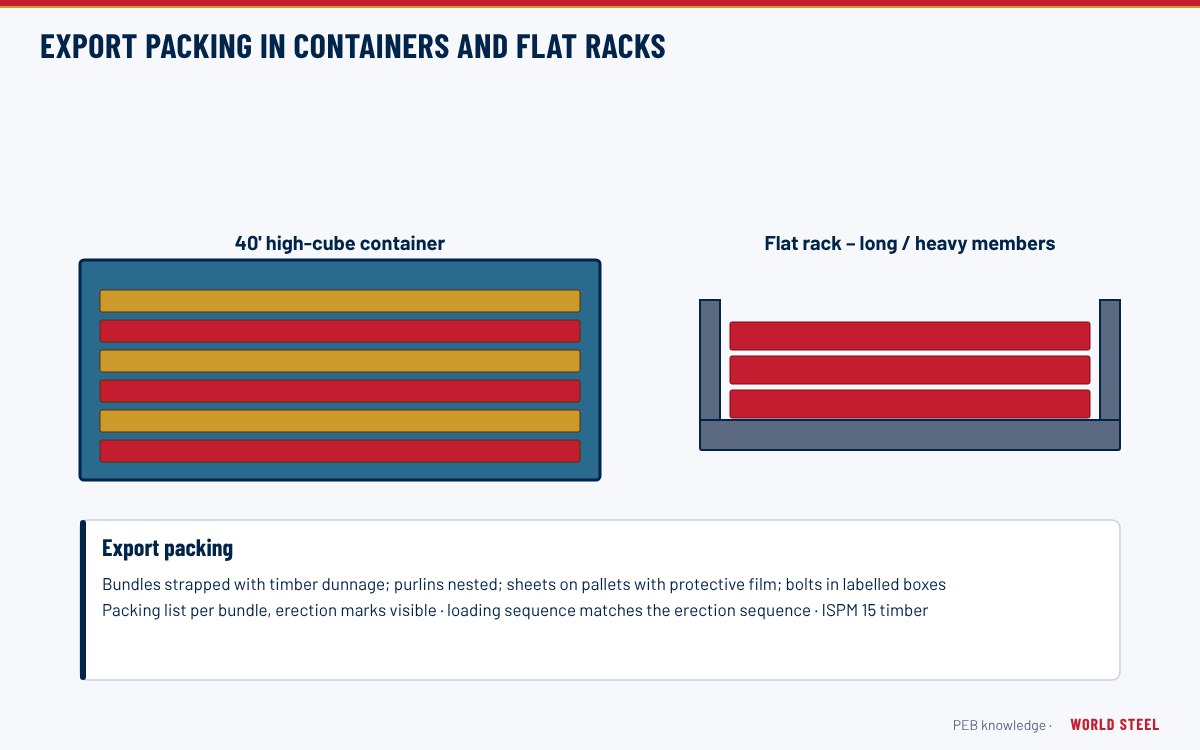
- Incoming inspection against the order, pit schedule labelling and consolidated export packing with the steel package via export supply.
Installation and selection notes
Choosing between composite, cast and steel usually comes down to traffic, handling and risk. Where a pit sits in a footpath or verge and is opened often by maintenance crews, a light composite lid reduces manual handling effort. Where metal theft is common, removing scrap value removes the motive. Where the pit houses live cables or sits near rail or power assets, a non-conductive cover simplifies earthing. For heavy or frequent truck traffic, a metal cover rated for the higher classes is normally the better choice.
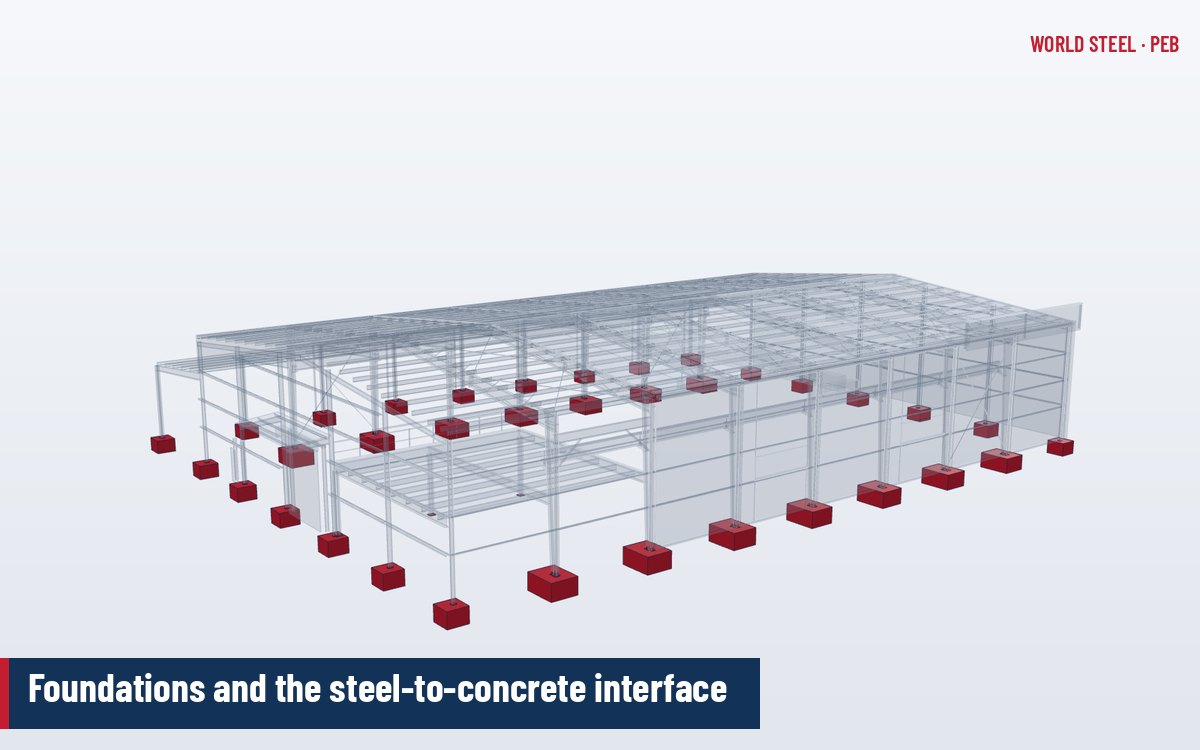
Composite frames and covers are installed to the manufacturer's instructions: frames fully bedded, covers seated flat and locked where required. Avoid site cutting or drilling of composite lids unless the manufacturer allows it. For a quotation send the pit schedule with clear openings, load class, any non-conductive or locking requirement, logo or marking needs and the frame detail. See also foundation interfaces.
Standards and requirements by market
Codes World Steel designs, fabricates and documents this product to – and the key geometric and load requirements in each market.
 United States
- AASHTOVehicle loading (where trafficked)
- ASTM A123Galvanizing of steel frames
- AWS D1.1Welding of steel frames
- Load
- Project-specified; manufacturer's rated loading
 Australia / NZ
- AS 3996-2019Access covers and grates
- AS/NZS 4680Hot-dip galvanized coatings (steel frames)
- AS 4586Slip resistance of pedestrian surfaces
- Load class
- A 10 kN, B 80 kN, C 150 kN, D 210 kN as rated (AS 3996-2019)
 Europe
- EN 124Gully tops and manhole tops for vehicular and pedestrian areas
- EN 124-5Gully tops and manhole tops made of composite materials
- EN ISO 1461Hot-dip galvanized coatings (steel frames)
- Load class
- A15 to D400 as rated by the manufacturer (EN 124)
Summary for orientation only – the project specification, the adopted code edition and the authority having jurisdiction govern.
Finishes
| Finish | Standards / notes |
|---|---|
| Moulded composite surface | Textured or gritted anti-slip top, colour by manufacturer |
| Hot-dip galvanised steel frames | AS/NZS 4680 · ASTM A123 · EN ISO 1461 |
Frequently asked questions
Can composite covers be used in roads?
Some products are rated for class C or D, but many are intended for pedestrian and light vehicle areas. Use only a product rated by its manufacturer for the class the designer specifies.
Why are composite covers used for telecom and electrical pits?
They are non-conductive and have no scrap value, which reduces electrical risk and theft.
Does World Steel make the composite covers?
No – they are produced by specialist manufacturers. World Steel supplies them with the project package and fabricates steel frames and supports where needed.
 New Zealand
 Singapore
 AS/NZS 5131 CC3